ہبہ نام کا مطلب اردو | Hiba Name Meaning in Urdu

ہِبہ لڑکیوں کیلئے ایک خوبصورت نام ہے جو اپنی معنیٰ کی گہرائی کی وجہ سے والدین کے دلوں کو بہت بھاتا ہے۔ یہ نام اس بات کی علامت ہے کہ بچہ اللّٰہ کی طرف سے ایک انمول تحفہ ہے۔

:ہِبہ نام کا مطلب

اس نام کا مطلب عطا، بخشش اور خیرات ہے۔

:ہِبہ نام کے متعلق تفصیل

ہِبہاردو نام
Hibaانگریزی نام
 تحفہ، بخشش، انعام، جائزلغوی معنی
لڑکینام کی جنس
عربیزبان
اسلاممذہب

فیروز اللغات کے مطابق

ہِبہ کا مطلب ہے عطا، بخشش اور خیرات (فیروز اللغات، صفحہ 1431، فیروز سنز)

عمومی سوالات اور انکے جوابات

ہِبہ نام کا کیا مطلب ہے؟

ہبہ نام کا مطلب اردو میں تحفہ، بخشش، انعام، جائز ہے۔ انگریزی میں ہبہ کا مطلب Gift, Forgiveness, Reward, Legit ہے۔

ہِبہ نام کس مذہب کا ہے؟

ہِبہ نام مذہب اسلام سے ہے۔

ہِبہ کِس لغت کا نام ہے؟

ہِبہ نام کی اصل عربی لغت ہے۔

Why do Muslims Fast on Arafah Day – Meaning & Importance

Day of Arafah (9th of Dhul Hijjah) is one of the most holy days in the Islamic calendar. Muslims all over the world attach great importance to it.

On this holy day, millions of non-pilgrimage Muslims decide to fast even though pilgrims are on pilgrimage in the plain of Arafah.

The result of this offering of prayer is immeasurable spiritual gains, and it is the epitome of Islamic faith, submission, gratefulness, and asking forgiveness.

The Day of Arafah fasting is not just a day without eating and drinking; it is a strong chance to think, pray, and get closer to Allah. Prophet Muhammad ﷺ also emphasized its significance and promised forgiveness of sins.

This is a day that allows one to renew, and so in an era when most people are trying to build a better relationship with Allah, it is another opportunity in the making.

To those who want to know more about such sacred practices, sites providing online classes of the Quran might be a good guide on the spiritual path.

The Meaning of the Day of Arafah

Arafat Day precedes Eid al-Adha. It is the core of the Hajj for the pilgrims. It is obligatory and standing on the plain of Arafah is not part of the Hajj. This gathering symbolizes unity and equality, and acceptance of submission to Allah.

On this same day, the Prophet ﷺ was also preaching the famous Farewell Sermon that talked about justice, brotherhood, and mercy.

To the rest of the world that is not performing Hajj, the day provides a means of engaged spiritual affiliation to pilgrims.

It is not only important because of its rituals but because of its message, which is to examine, repent, and reconnect with the Creator.

The Reason Why Fasting on Arafah is So Profitable

The Prophet Muhammad ﷺ said, “Fasting on the day of Arafah expiates the sins of the previous year and the coming year.” (Sahih Muslim). That demonstrates how great mercy Allah gives to his servants.

Fasting is a meek form of worship. On this day, Muslims do not eat, drink, and worldly distractions with a view to getting closer to Allah. It is a means of soul purification; a means of forgiveness as well as the reward of outstanding rewards of which one can not imagine.

Those who are not present in Hajj can also be honored by fasting on Arafah and so that they can also be able to take part in the blessings that come with this holy period.

The Day of Pardons and Mercy

The Day of Forgiveness is referred to as Arafah. Our Prophet ﷺ said, There is no day upon which Allah liberates more people out of the Hell Fire than the Day of Arafah. Such is the divine mercy available to all believers, repenting his or her lives genuinely, looking forward to the approval of Allah.

Muslims spend this day in dhikr (remembrance), dua (supplication), and Quran recitation. This is an opportunity to think about life and repent, and promise to change.

People who study the Quran online usually have a better understanding of the strength of such days because the Quran shares about the mercies of Allah on many occasions.

Association with Hajj and Unity of the Ummah

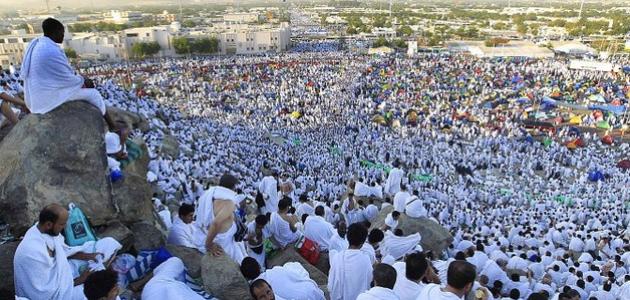
Muslims all over the world are united by the Day of Arafah. Millions of people stand at the mountain of Arafah wearing white garments as those at home spiritualize them, bonding with them by fasting and praying.

This sense of unitarianism of purpose and worship is one of the strengths of the international Muslim Ummah.

Fasting by those who are not pilgrims is also suggestive of identification with those who are making Hajj.

It is also a reminder of the path that every Muslim has to follow on the way to self-purification and submission to Allah.

The Way Muslims Spend the Day of Arafah

  • The dawn until the evening fasting
  • Take additional prayers and dhikr
  • Excessive dua on behalf of oneself and the Ummah
  • Ask God to forgive and think of personal failures
  • Read and contemplate verses in the Quran
  • Never be sinful and do more good things

This commemoration aids Muslims to spiritually establish a strong bond with the spirituality of the day, whether or not they are in the plains of Arafah.

Significance of Duas this Day

Day of Arafah is recognized as the day of acceptance of dua. The Prophet ﷺ said, “The best supplication is the supplication of the Day of Arafah.” (Tirmidhi).

This is the most appropriate moment when Muslims can give all their hearts to Allah, soliciting protection, tranquility, health, and repentance.

It is urged that the believers request both spiritual and temporal blessings. Duas, which are said, are considered to be acknowledged more easily during that day rather than on other days.

Rejuvenation and Self-Consideration

Spiritual fasting in Arafah is an opportunity to be reborn. It involves Woodward looking at self, abandonment of pride, and repenting to Allah honestly. Muslims clean their hearts on such a day and find peace within and commit to being better people.

Fasting in itself also silences the physical and heightens the spiritual consciousness. It assists the believer in shedding worldly things and lays emphasis on the eternal mission of life.

It is a reminder of the fact that life is temporary.

Being at Arafah reminds the Muslims about the Judgment Day. The pilgrim clothing in white clothes is used to represent shrouds, and the great crowd is used to signify the gathering on the Last Day. Fasting on this day, even among the non-pilgrims, helps people to remind themselves about death, accountability, and the afterlife.

This consideration produces repentance and God-fearing worship. It calls on the believer to be ready to face the next life, righteous and humble. This self-awareness is also nurtured through the continued study of the Quran; this may be done through online Quran classes.

Conclusion

Arafah day does not only belong to the Hajj people. It is coveted by every Muslim. This day’s rewards when one fasts include unmatched rewards, forgiveness, and closeness to Allah. It is a day of reflection, solidarity, and mercy.

Arafah reminds all people, whether a scholar or a seeker, who have only just started to an aware of the connection with god and the spiritual regeneration of each soul.

It is one day in an era of distraction that Muslims can break, look around, and come back to their Lord. Knowing such sacred moments through reliable sources such as an online Quran academy may contribute to the comprehension of its significance and application in everyday life.
Benefits and Importance of Last 4 Ayat of Surah Muminoon

The last 4 Ayat of Surah Muminoon remind the believers of the purpose of creation, the oneness of Allah, and the importance of seeking His forgiveness and mercy.

Surah Al Muminun is the 23rd Surah and is placed in the 18th Juzz of the Quran. This Surah contains 118 verses, 1162 words, and 4401 letters, and it is revealed in “Makkah. The meaning of Muminoon is “The Believers”. In this surah mentioned the qualities of the believers.

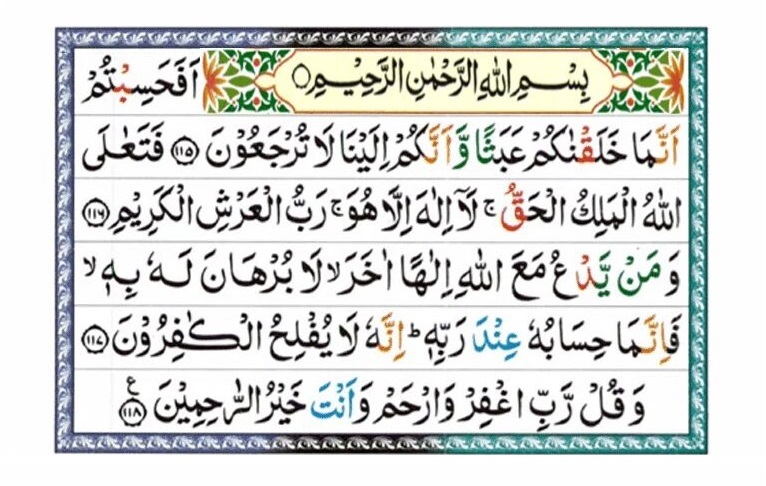
Surah Al Muminoon last 4 Ayat Arabic

Suran Al Muminoon Ayat 115 (Afahasibtum Ayat)

                                                      أَفَحَسِبْتُمْ أَنَّمَا خَلَقْنَاكُمْ عَبَثًا وَأَنَّكُمْ إِلَيْنَا لَا تُرْجَعُونَ

Suran Al Muminoon Ayat 116       

                                        فَتَعَالَى اللَّهُ الْمَلِكُ الْحَقُّ ۖ لَا إِلَٰهَ إِلَّا هُوَ رَبُّ الْعَرْشِ الْكَرِيمِ

Suran Al Muminoon Ayat 117    

        وَمَن يَدْعُ مَعَ اللَّهِ إِلَٰهًا آخَرَ لَا بُرْهَانَ لَهُ بِهِ فَإِنَّمَا حِسَابُهُ عِندَ رَبِّهِ ۚ إِنَّهُ لَا يُفْلِحُ الْكَافِرُونَ

Suran Al Muminoon Ayat 118       

                                                              وَقُل رَّبِّ اغْفِرْ وَارْحَمْ وَأَنتَ خَيْرُ الرَّاحِمِينَ

Surah Al Muminoon Last 4 Ayat Translation English

Translation of Ayat 115 (Afahasibtum Ayat)

Then did you think that we created you uselessly and that to us you would not be returned?

Translation of Ayat 116

So exalted is Allah, the Sovereign, the Truth; there is no deity except Him, Lord of the Noble Throne.

Translation of Ayat 117

And whoever invokes besides Allah another deity for which he has no proof – then his account is only with his Lord. Indeed, the disbelievers will not succeed.

Translation of Ayat 118

And say, ‘My Lord, forgive and have mercy, and You are the best of the merciful.

Surah Al Muminun Last 4 Ayat Benefits

There are a few benefits of the last 4 verses of the Surah Muminoon that you can get when reciting these ayats.

The main purpose of reading these Ayat is to cure from any kind of disease, no matter what the disease is and no matter what the symptoms are. Must recite Aurah al Muminoon last 4 ayat, and you’ll InshAllah be cured from the disease.

Urdu Translation of Last Four Ayats of Surah Al Muminun

تو کیا تم نے یہ سمجھ رکھا تھا کہ ہم نے تمہیں بے مقصد پیدا کیا ہے اور یہ کہ تم ہماری طرف نہیں لوٹائے جاؤ گے؟

 تو بہت بلند و برتر ہے اللہ، سچا بادشاہ، اس کے سوا کوئی معبود نہیں، وہی عزت والے عرش کا مالک ہے۔

  اور جو شخص اللہ کے ساتھ کسی دوسرے معبود کو پکارتا ہے، جس کے لئے اس کے پاس کوئی دلیل نہیں، تو اس کا حساب اس کے رب کے پاس ہی ہے۔ بے شک کافر لوگ فلاح نہیں پائیں گے۔

  اور کہو، اے میرے رب، بخش دے اور رحم فرما، اور تُو سب رحم کرنے والوں سے بہتر ہے۔

The Power of Islamic Supplications (Duas)

Islamic supplications, known as duas, are a powerful means of connecting with Allah. They offer spiritual relief, guidance, and blessings in every aspect of life. Duas are not just requests but acts of worship that bring peace, strengthen faith, and invite divine mercy.

The Significance of Duas in Islam

Dua is a direct communication between a believer and Allah. The Quran emphasizes its importance:

📖 “And your Lord says: Call upon Me; I will respond to you.” (Quran 40:60)

The Prophet Muhammad (ﷺ) also said:

🕌 “Dua is the essence of worship.” (Tirmidhi)

This highlights that supplications are a powerful spiritual tool that can change destiny and bring divine blessings.

Benefits of Dua in Islam

  1. Brings One Closer to Allah: Supplications strengthen faith and remind believers of Allah’s mercy and power.
  1. Source of Peace and Comfort: Reciting duas, especially in distress, brings inner peace and contentment.
  1. Protection from Harm: Duas serve as a shield against evil, hardship, and misfortunes. Ayatul Kursi is a well-known dua for protection.
  1. Forgiveness and Guidance: Seeking forgiveness (Istighfar) through duas cleanses sins and opens the doors of blessings.
  1. Acceptance of Prayers: Allah answers duas in different ways: immediately, delayed, or replaced with something better.

Powerful Duas for Daily Life

Here are some essential supplications every Muslim should recite:

  • Dua for Forgiveness: “Astaghfirullah wa atubu ilayh” (I seek Allah’s forgiveness and turn to Him in repentance).
  • Dua for Protection: “Bismillahilladhi la yadurru ma’asmihi shay’un fil-ardi wa la fissama’i wa huwas-Sami’ul-‘Alim” (In the name of Allah, nothing in the heavens or earth can harm with His name).
  • Dua for Ease in Hardship: “Allahumma la sahla illa ma ja’altahu sahla” (O Allah, make things easy, as You alone can).

Best Times for Dua Acceptance

For acceptance of Duas, recite Duas at these special times:
During Tahajjud (late-night prayer)
While fasting and at Iftar
Between Adhan and Iqamah
On Fridays, especially before Maghrib
During Sujood (prostration in prayer)

Conclusion

Dua is a gift from Allah, allowing believers to seek help, express gratitude, and strengthen their faith. By making supplications regularly, we unlock countless blessings and divine assistance in life.

Importance of Witr Prayer in Islam

Witr prayer holds a special place in Islam, offering spiritual benefits and bringing a believer closer to Allah. It is an emphasized Sunnah (Sunnah Mu’akkadah) according to most scholars, while some consider it wajib (obligatory). The Prophet Muhammad (ﷺ) never abandoned Witr prayer, highlighting its significance.

What is Witr Prayer?

Witr is a unique, odd-numbered prayer performed after Isha Salah, usually in one, three, five, or more rak’ahs. It is concluded with Dua Qunoot, seeking Allah’s mercy and guidance.

Significance of Witr Prayer

  1. A Sunnah of the Prophet ﷺ – The Prophet (ﷺ) said:
    “Witr is a duty for every Muslim.” (Tirmidhi)
  2. Completes Night Prayers – It serves as the last prayer of the night, completing one’s daily worship.
  3. Brings Allah’s Blessings – The Prophet (ﷺ) advised believers to pray Witr, as it brings forgiveness and rewards.
  4. Protection from Neglect – Missing Witr intentionally is discouraged, as it is a means of nearness to Allah.

How to Perform Witr?

  • It can be offered immediately after Isha or later in Tahajjud time.
  • Recite Surah Al-Fatihah and another surah.
  • In the last rak’ah, recite Dua Qunoot before bowing.

Conclusion

Witr prayer is a powerful act of devotion, enhancing a believer’s connection with Allah. Regularly offering Witr strengthens faith and ensures spiritual growth. Let’s make it a habit to perform this blessed prayer every night.

Dua e Qunoot: Meaning, Benefits, and Importance in Islam

Dua e Qunoot is a powerful supplication recited during Witr prayer in Isha Salah. It is an essential part of Islamic prayers, offering spiritual benefits and divine protection. Muslims around the world recite this dua to seek Allah’s mercy, guidance, and protection from hardships.

In this article, we will explore the meaning, benefits, and significance of Dua e Qunoot, along with transliteration and translation to help you understand its deeper essence.

What is Dua e Qunoot?

Dua e Qunoot is a special supplication recited during the last Rak’ah of Witr prayer. The word Qunoot (قنوت) means obedience, humility, and devotion in Arabic. It is an act of submission to Allah, seeking His help and blessings.

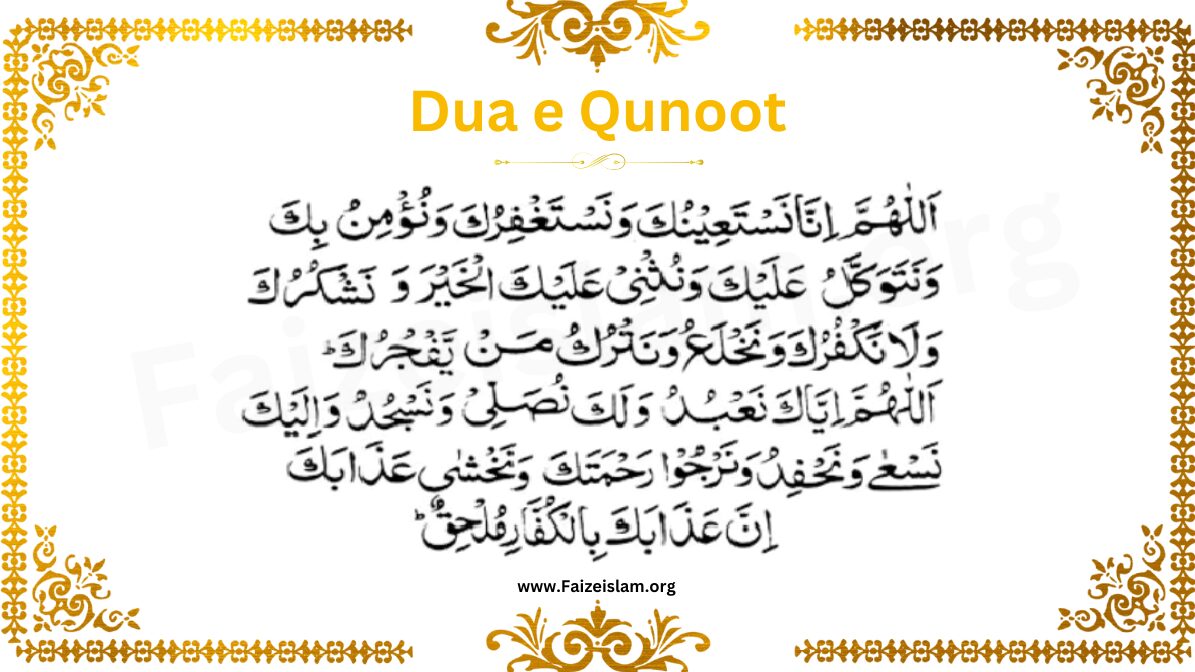
Dua e Qunoot in Arabic

اللَّهُمَّ إِنَّا نَسْتَعِينُكَ وَنَسْتَغْفِرُكَ وَنُؤْمِنُ بِكَ وَنَتَوَكَّلُ عَلَيْكَ وَنُثْنِي عَلَيْكَ الْخَيْرَ، وَنَشْكُرُكَ وَلَا نَكْفُرُكَ، وَنَخْلَعُ وَنَتْرُكُ مَنْ يَفْجُرُكَ، اللَّهُمَّ إِيَّاكَ نَعْبُدُ، وَلَكَ نُصَلِّي وَنَسْجُدُ، وَإِلَيْكَ نَسْعَى وَنَحْفِدُ، وَنَرْجُو رَحْمَتَكَ، وَنَخْشَى عَذَابَكَ، إِنَّ عَذَابَكَ بِالْكُفَّارِ مُلْحِقٌ.

Transliteration of Dua e Qunoot

Allahumma inna nasta’eenuka wa nastaghfiruka wa nu’minu bika wa natawakkalu ‘alayka wa nuthni ‘alaykal-khaira wa nashkuruka wa la nakfuruka wa nakhla’u wa natruku may yafjuruka. Allahumma iyyaka na’budu wa laka nusalli wa nasjudu wa ilayka nas’aa wa nahfidu wa narju rahmataka wa nakhsha ‘adhabaka, inna ‘adhabaka bil-kuffari mulhiq.

Translation of Dua e Qunoot

“O Allah! We seek Your help and ask for Your forgiveness. We believe in You and rely on You. We praise You for all the good and are grateful to You. We do not deny You, and we forsake those who disobey You. O Allah! You alone we worship, and to You, we pray and prostrate. We strive towards You and seek Your mercy. We fear Your punishment, for indeed, Your punishment is severe upon the disbelievers.”

Significance and Benefits of Dua e Qunoot

  1. Seeking Allah’s Help – This dua asks for divine assistance in times of difficulty.
  2. Forgiveness of Sins – It is a means of asking Allah for forgiveness and purification of the heart.
  3. Strengthening Faith – Reciting it regularly strengthens Tawakkul (trust) in Allah.
  4. Protection from Hardships – It helps in seeking protection from trials and calamities.
  5. Enhancing Humility – This supplication promotes devotion and humility in prayer.

When and How to Recite Dua e Qunoot

Dua e Qunoot is recited in the last Rak’ah of Witr prayer during Isha Salah. After reciting Surah Al-Fatiha and another surah, follow these steps:

  1. After completing Rukoo’ (bowing), raise your hands.
  2. Recite Dua e Qunoot while standing.
  3. Conclude by going into Sujood (prostration).

FAQs About Dua e Qunoot

  1. Is Dua e Qunoot mentioned in the Quran?

No, Dua e Qunoot is not mentioned in the Quran but is found in Hadith literature.

  1. Can Dua e Qunoot be recited in other prayers?

Yes, Dua e Qunoot can be recited during times of distress, especially in Fajr prayer as per some Hadith references.

  1. What if I forget to recite Dua e Qunoot in Witr prayer?

If you forget to recite it, you can perform Sajda Sahw (prostration of forgetfulness) at the end of your prayer.

Conclusion

Dua e Qunoot is a powerful supplication that strengthens faith, increases reliance on Allah, and offers protection from hardships. Understanding its meaning and benefits can enhance your spiritual connection during prayer. Make it a habit to recite Duae Qunoot regularly and seek Allah’s mercy with sincerity.

Related Articles

Share this article with others so they can benefit from this beautiful supplication!

The Emergence of Dajjal | A Major Sign of Judgement Day

One of the ten significant signs preceding Judgement Day is the emergence of Dajjal. Throughout history, the mischief of Dajjal is considered the most severe and perilous. The gravity of his trials can be understood by the fact that every Prophet warned their followers about him. (Tirmizi, vol. 4, pp. 101, Hadith 2241)

Who is Dajjal and What Are His Types?

The term “Dajjal” refers to a grave liar. Since he will deceive people by blending truth with falsehood, he is aptly named Dajjal. Initially, he will portray himself as a believer, calling people towards goodness, but later, he will falsely claim prophethood and ultimately divinity. It is mentioned that he will be of Jewish origin. (Fath-ul-Bari, vol. 14, pp. 78; Al-Tazkirah Li-Qurtubi, pp. 607; Mirat-ul-Manajih, vol. 7, pp. 276)

Mufti Ahmad Yar Khan Na’eemi رَحْمَةُ اللّٰهُ عَلَيْه stated: There are two types of Dajjal – minor and major. Many minor Dajjals have appeared and will continue to appear, including false prophets, misguided religious leaders, and those who deceive people in the name of religion. The major Dajjal, however, will be the one who claims divinity. (Mirat-ul-Manajih, vol. 7, pp. 276)

Belief in the Emergence of Dajjal

Imam Muhammad Bin Ahmad Qurtubi رَحْمَةُ اللّٰهِ عَلَيْه explained, “Believing in the existence and eventual appearance of Dajjal near Judgement Day is a truth and a core belief of Ahl-e-Sunnat, supported by Islamic jurists and Hadith scholars.” (Al-Tazkirah Li-Qurtubi, pp. 612)

Physical Dajjal Description

Various Hadith describe Dajjaal’s appearance. He will be a tall, one-eyed young man. His defective eye will resemble a swollen grape, while his other eye will be bloodshot. He will have a wide chest, slightly sunken, and a prominent forehead with the word ك ف ر (kafir) written between his eyes. Every Muslim, literate or not, will be able to read this inscription. Dajjal will have curly hair. (Bukhari, vol. 4, pp. 450, Hadith 7128; Muslim, pp. 1199, Hadith 7364-7367; Al-Tazkirah Li-Qurtubi, pp. 640)

The Emergence of Dajjaal

Dajjal’s appearance will be preceded by catastrophic conditions worldwide. According to Hadith, a severe famine will occur over three years:

  • In the first year, the sky will withhold one-third of its rain, and the earth will reduce its production by one-third.
  • In the second year, two-thirds of rain and produce will cease.
  • In the third year, no rain will fall, and the earth will stop producing entirely. This drought will lead to the death of all livestock. (Tirmizi, vol. 4, pp. 102, Hadith 2244; Musnad-e-Imam Ahmad, vol. 10, pp. 435, Hadith 27639; Al-Tazkirah Li-Qurtubi, pp. 610-615)

During this time, mischief will increase, knowledge and spirituality will decline, and the world will lack righteous scholars. Amidst this turmoil, Dajjal will emerge from a region called Asfahan or Khurasan in the east.

Dajjal’s Journey and Duration on Earth

Dajjal will stay on earth for 40 days, with the first day equivalent to a year, the second to a month, the third to a week, and the rest as regular days. (Muslim, pp. 1200, Hadith 7373) He will traverse the earth on a massive donkey, whose ears will be 40 arms apart. His donkey’s pace will be so swift that a single step will cover a mile. Dajjaal will visit every part of the world except Makkah, Madinah, Bayt-ul-Muqaddas, and Mount Toor, as angels will guard these places. He will, however, encamp outside Madinah, where three tremors will expel every hypocrite and disbeliever from the city. (Muslim, pp. 1206, Hadith 2943; Mustadrak lil-Haakim, vol. 5, pp. 753, Hadith 8675; Al-Tazkirah Li-Qurtubi, pp. 614-616)

Tricks of Dajjal

Dajjal will use deceit to misguide people and test their faith. He will carry mountains of bread, while those who do not follow him will face extreme hardships. He will have two streams – one named Jannah and the other Hell. However, his so-called Jannah will be Hell, and his Hell will be Jannah. He will perform deceptive miracles, such as commanding rain to fall and bringing a slain person back to life. (Musnad Imam Ahmad, vol. 5, pp. 156, Hadith 14959)

The Death of Dajjal

Overwhelmed by Dajjal’s trials, believers will seek refuge on Mount Jabal-e-Dukhan. Dajjal will surround them, causing immense suffering. At this time, Allah عَزَّوَجَلَّ will send Sayyiduna ‘Isa عَـلَيْـهِ الـسَّـلَام, who will kill Dajjaal at a place called Ludd [لُدّ]. Following this, none of Dajjaal’s followers will survive. (Musnad Imam Ahmad, vol. 5, pp. 156, Hadith 14959; Muslim, pp. 1200, Hadith 7373)

Before Sleeping Dua: A Peaceful Night

In Islam, it is considered important to invoke Allah (SWT) before going to sleep. This act of supplication is known as the “before sleeping dua” (Dua before sleep). It is believed to bring peace, tranquility, and protection throughout the night.

Benefits of the Before Sleeping Dua

  • Peace and tranquility: Reciting the before sleeping dua can help calm the mind and body, promoting a peaceful sleep.
  • Protection: It is believed that the dua acts as a shield, protecting the individual from harm during the night.
  • Gratitude: The dua encourages gratitude to Allah (SWT) for the blessings of the day.
  • Connection with Allah: Reciting the dua strengthens the individual’s connection with Allah (SWT).

Before Sleeping Dua Arabic

اللَّهُمَّ بِاسْمِكَ أَمُوتُ وَأَحْيَا

Transliteration: Allahumma Bismika amootu wa ahya.

Translation: O Allah, In Your name, I die and I live.

How to Perform the Before Sleeping Dua

  1. Lie down in a comfortable position.
  2. Face the Qiblah (direction of Mecca).
  3. Recite the following Dua:
  4. Visualize yourself under Allah’s (SWT) protection.
  5. Go to sleep with a peaceful heart.

Conclusion

The before sleeping Dua is a simple yet powerful act that can have a profound impact on your sleep and well-being. By incorporating this dua into your nightly routine, you can experience greater peace, tranquility, and protection.


Beautiful Quranic Names for Muslim Babies

Choosing a name for your newborn is a special and thoughtful process. Many Muslim parents opt for names inspired by the Quran, as they carry deep spiritual significance and connect their child to Islamic heritage. Here are a few Quranic names for Muslim baby boys and girls, along with their meanings:

For Baby Boys

  1. Abdullah: “Servant of God”
  2. Ibrahim: “Father of many nations”
  3. Yusuf: “Beautiful”
  4. Muhammad: “Praised”
  5. Adam: “Created from earth”
  6. Zakariya: “Remembering God”
  7. Dawud: “Beloved of God”

For Baby Girls

  1. Aisha: “Living”
  2. Maryam: “Exalted”
  3. Fatima: “One who abstains”
  4. Khadeeja: “Pure”
  5. Hajar: “Stone”
  6. Amina: “Trustworthy”
  7. Zainab: “Adorned”

Remember: When choosing a name for your child, consider its pronunciation, meaning, and cultural relevance. The most important thing is to select a name that holds special significance for you and your family.

Fatah Pane ke liye Wazifa Urdu

Fatah Pane ke liye Wazifa

Prayer for Deliverance from enemies, Domination over them, and victory

Hazrat Dawud (peace be upon him) made this supplication for victory over the enemies when there was a fight between Goliath and his army, At the time of war this dua should be recited: Surah Al Baqarah Ayat 250.

رَبَّنَاۤ اَفْرِغْ عَلَیْنَا صَبْرًا وَّ ثَبِّتْ اَقْدَامَنَا وَ انْصُرْنَا عَلَى الْقَوْمِ الْكٰفِرِیْنَ

Translation: “Our Lord, grant us patience and help us. The people of the infidels

This is the supplication of the righteous servants of Allah Ta’ala, it should be recited at the time of battle:

Fatah Pane ke liye Wazifa Urdu

دشمنوں سے نجات ، ان پر غلبہ اور فتحیابی کی دعا

دشمنوں پر فتحیابی کے لیے حضرت داود علیہ سلام نے یہ دعا کی تھی جس وقت جالوت اور اس
کے لشکر سے مقابلہ ہوا تھا۔ جنگ کے وقت یہ دعا پڑھنی چاہیے:

رَبَّنَاۤ اَفْرِغْ عَلَیْنَا صَبْرًا وَّ ثَبِّتْ اَقْدَامَنَا وَ انْصُرْنَا عَلَى الْقَوْمِ الْكٰفِرِیْنَ

اے ہمارے رب! ہمیں صبر دے اور ہمارے قدموں کو جمائے رکھ اور کا فرقوم
.پر ہماری مدد فرما

.اللہ تعالیٰ کے نیک بندوں کی یہ دعا ہے ، لڑائی کے وقت اسے پڑھنا چاہیے